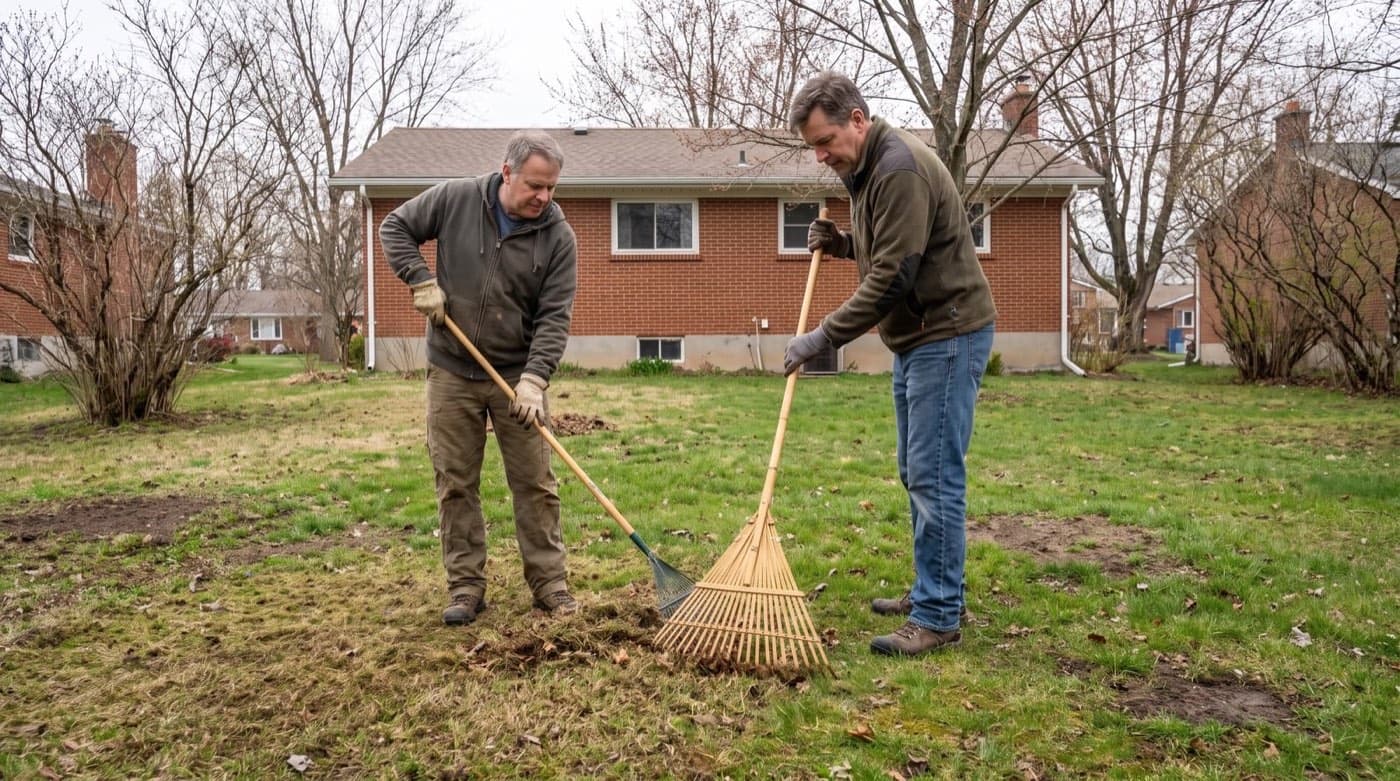
Answer First: A Toronto spring lawn plan runs from late March to May and follows Ontario's rules instead of working against them. Let the lawn dry before raking, avoid any synthetic weed or crabgrass spray because Ontario bans cosmetic lawn pesticides, mow at 2.5 to 3.0 inches (about 65 to 75 mm), and handle spring seeding as patch repair since fall seeding is far more successful. Do these four things and you will beat most lawns on the street.
In Toronto, most spring lawn damage is caused by an eager homeowner who rakes on the first warm Saturday while the lawn is still half-frozen mush. The grass turns green at its own pace. Your role is to help only at the right moments and to keep off the lawn at the wrong ones. The month-by-month version follows.
When should you actually start?
The right time is after the lawn has dried out and firmed up, normally the first half of April, not the first mild day in March. When you rake a wet, thawing lawn, it tears at the roots and packs down underfoot. One quick test: if you leave footprints or the ground feels spongy, it is too early.
Most Toronto lawns are Kentucky bluegrass and fescue blends, and these cool-season grasses grow roots best once soil temperatures sit between 50°F and 65°F, roughly 10°C to 18°C (Penn State Extension). Roots keep growing below that range, but only slowly, so waiting through March is more useful than effort.
Quotable: The spring lawn mistake people in Toronto make most often is beginning too soon. When you rake or walk on a wet, half-frozen lawn, you rip the grass crowns and pack the soil, doing more harm than the cleanup helps.
Month by month: the Toronto spring checklist
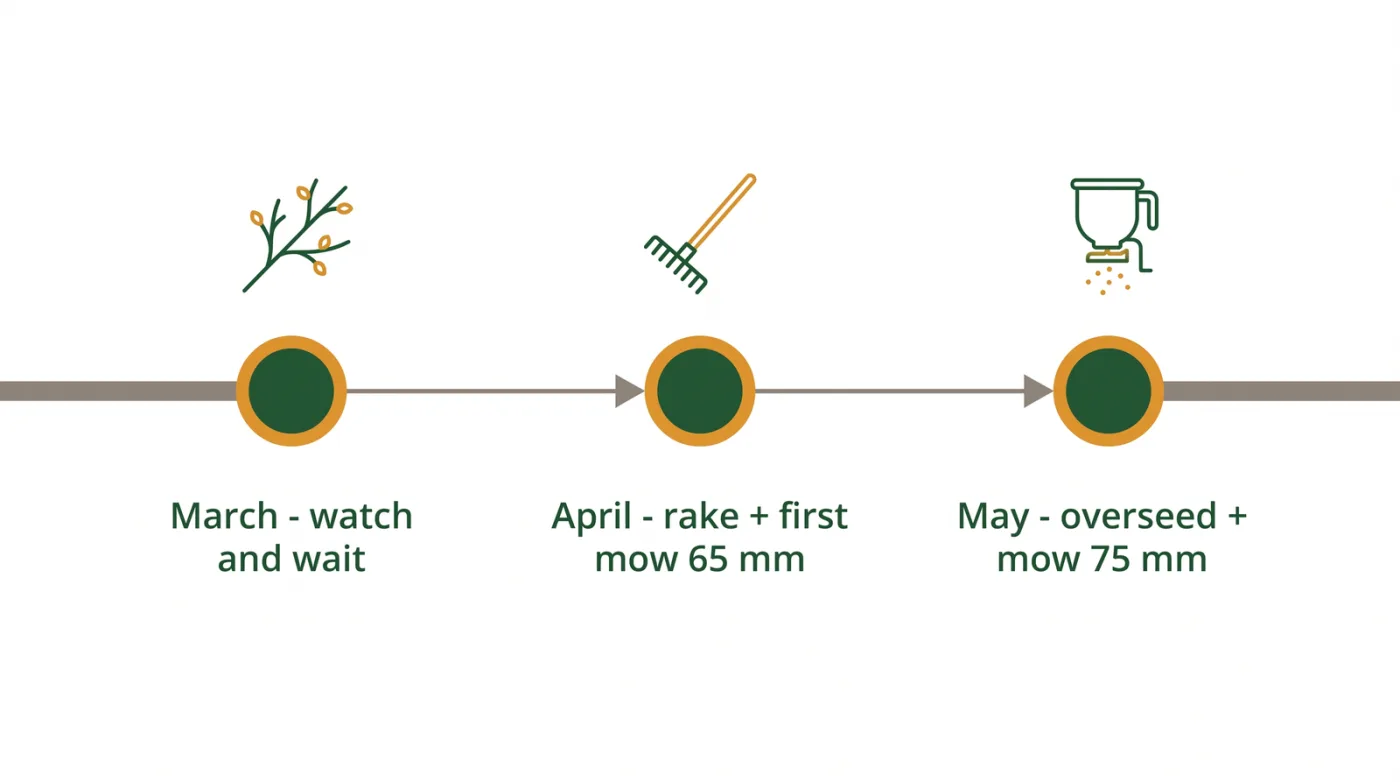
The following order tracks the lawn's condition instead of fixed dates, because Toronto springs differ by weeks from one year to the next.
Late March: observe and hold off. Pick up branches and heavy debris with your hands, but keep off the wet turf. Check for matted grey patches of snow mould; it usually recovers on its own once the spot dries and receives light. Once the lawn is dry, gently lifting the grass with a rake helps.
April: rake, assess, first mow. After the lawn dries, rake it lightly to clear away dead grass and leaves and to improve air movement, which prevents fungus. When the grass is growing actively, cut it for the first time at the lower end of the 2.5 to 3.0 inch range. During this month, identify bare patches that you can seed later. If April rain keeps the grass wet, read why you should not mow wet grass before that first cut.
May: cut on a regular schedule, overseed thin spots, fertilize lightly. Set routine mowing to the upper end of that range, around 3 inches. From mid-April through mid-May, overseed any thin or worn areas before the heat arrives. A light spring fertilization is fine, but the larger fertilization belongs in fall.
The rule that separates Ontario from American lawn advice
In Ontario, spraying to get a weed-free lawn is illegal. The province's cosmetic pesticide ban, an amendment to the Pesticides Act in effect since 2009, bars common lawn chemicals such as 2,4-D and glyphosate for cosmetic use and takes precedence over any municipal bylaw (Landscape Ontario).
That means the standard spring guidance posted on American internet sites, "apply a crabgrass pre-emergent," is not legally valid here. The products allowed in Ontario are different, and when used on a consistent schedule, they work:
- Corn gluten meal acts as a natural pre-emergent for early spring application.
- Overseeding thickens the turf so weeds cannot find bare soil to take hold in.
- Mowing high, at 2.5 to 3.0 inches, shades the soil. Purdue Extension states this plainly: cutting below that range causes crabgrass populations to rise.
- Hand-pulling young weeds after rain, when the whole root comes up easily.
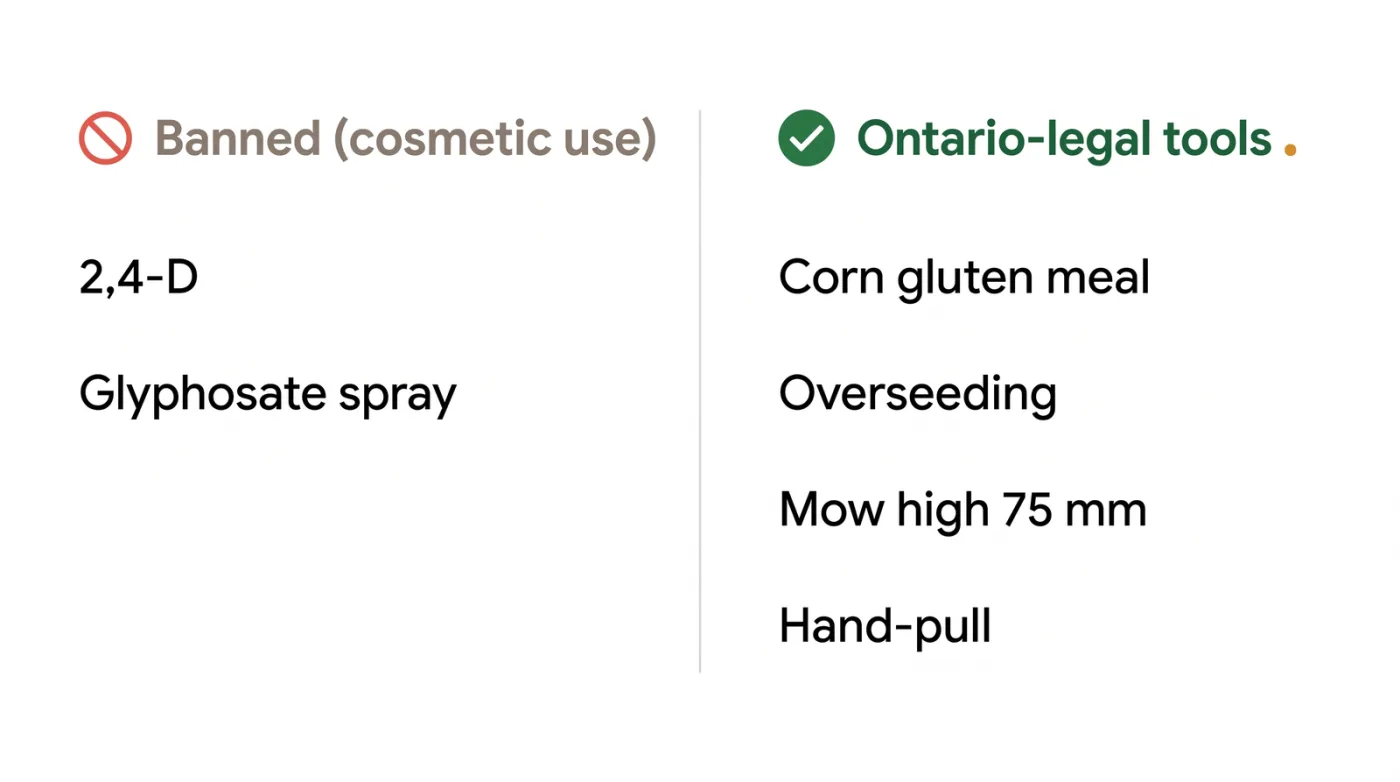
Quotable: Ontario's cosmetic pesticide ban means a Toronto lawn has no legal synthetic crabgrass spray. Weed control actually comes from a dense, high-mown lawn, not from a bottle.
Crabgrass, a low, spreading annual weed, germinates when soil at a quarter-inch depth holds about 60°F, near 16°C, for three to five days (Purdue Extension). In the GTA, forsythia shrubs usually finish blooming around the same time as this window, and that bloom is a more reliable cue than a calendar date.
Do you need to dethatch or aerate?
Only do it when the lawn indicates a need. Dethatching removes the spongy dead layer that accumulates on the soil surface. It is worthwhile only if that layer has become thick enough for the lawn to feel springy underfoot and for water to pool rather than soak in. Delay until late spring, when the grass is growing fast enough to recover.
Core aeration loosens the compacted clay soil found across Scarborough and much of Toronto, so it really helps, but fall is the stronger season for it. When aeration, dethatching, and overseeding are combined in one spring weekend, they stress the lawn more than they help. Spread the tasks out, and save the heavy renovation for September.
What the Toronto lawn care market looks like when you go to book
Every homeowner on the street decides at the same time in spring, so know what you can choose from before you start making calls.
YardGrade monitors 136 lawn care companies in Toronto, operating in 28 areas of the city. Of that group, 127 display a public star rating, and 112 of them, 88%, sit at 4.5 stars or higher. That proportion seems reassuring at first, but a closer look shows the evidence behind those stars is often weak: the median company has about 26 reviews, and 9 of the 136 have no reviews at all.
This has two consequences. A 5.0 rating from four reviews is far less informative than a 4.6 from ninety, so check the review count before the score. And 118 of the 136 have a working website, meaning roughly one in seven has no page you can inspect at all before they are standing in your driveway.
From the data: The numbers above are a direct count from YardGrade's Toronto lawn care listings, August 2026.
A few Toronto-specific housekeeping notes
Two City rules quietly govern spring lawn work. First, once the turfgrass on a private lawn grows past 20 centimetres, the City requires the property owners and occupants to cut it, so do not let the first April growth get away from you. Second, on your collection day, put spring cleanup waste out as yard waste in kraft paper bags; the City will not take grass clippings, plastic bags, or soil, so let short clippings stay on the lawn to nourish it.
When a lawn needs more than simple maintenance, spring is a good time to get pricing, since crews are starting their season. Review current ranges on the lawn care cost page or browse vetted pros in the lawn care directory for Etobicoke.
Need a clear answer on whether your lawn requires a professional or just time? Request a quote and compare up to three vetted local lawn care pros side by side. Your contact details go only to the one you select.